Fredrikstad from Oslo: A 1567 Star Fort You Walk for Free, and the Ferry That Costs Nothing
An hour south, a 1567 star fort of moats, ramparts, and cobbles — among Scandinavia’s best-preserved fortress towns, walked for free, reached by a ferry the city made free and kept that way.
The short version
- Trains run Oslo to Fredrikstad in about an hour on the Østfold line (vy.no), and the city’s free ferries cross the Glomma from the station side to the old town’s gate — fare-free by municipal decision per the alarm, and beloved for it.
- Gamlebyen is the credential: founded 1567 and fortified into a full star fort through the 17th century, the old town survives with moats, bastions, ramparts, and grid intact — among Scandinavia’s best-preserved fortress towns, and lived-in rather than staged (town information at visitfredrikstad.com).
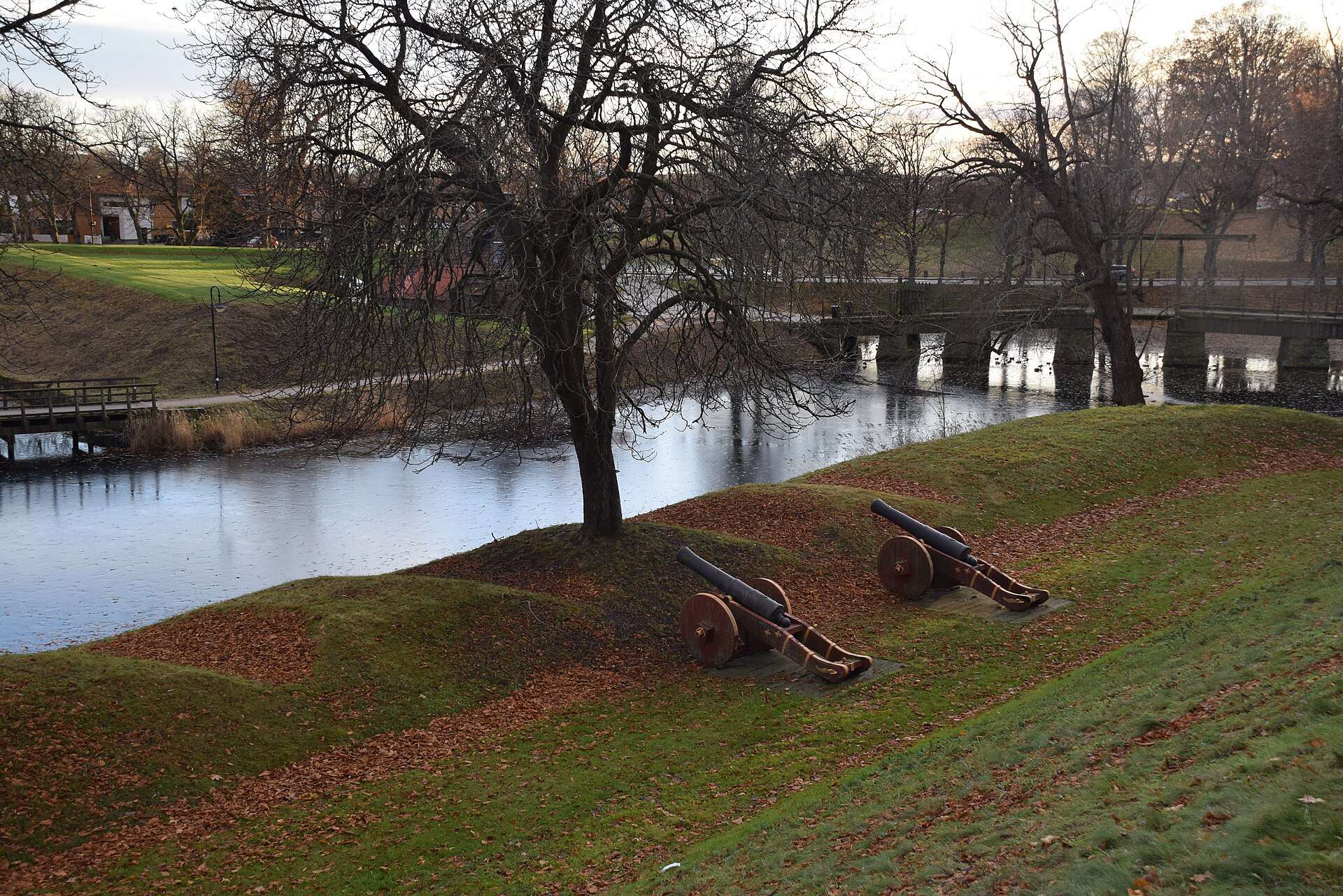
- The rampart circuit is the free spectacle per the alarm: the star’s earthworks walked around the moat ring, cannon at the corners, the geometry reading clearly from every bastion point.
- Inside the star, the cobbled grid runs galleries, glassblowers, and craft workshops in the garrison buildings — a working artisan economy at Norwegian-modest scale — with cafés filling the arsenal squares.
- Kongsten fort per the alarm holds the hill beyond: the 1680s outwork’s ramparts and casemates, free and lightly visited, closing the military geography for those with the extra hour.
- The Saturday market per the alarm fills the fortress squares with produce and flea-market Norway at its most sociable — and the city’s free-ferry network extends the day’s boat rides across the river mouth at the same unbeatable fare.

Getting there
The train-and-free-ferry combination makes this the network’s cheapest arrival anywhere: the crossing takes minutes and lands you at the fortress gate. The star walks flat and compact — ramparts first for orientation, grid second, Kongsten as the extension — and the whole day runs bookings-free per the alarm. Summer weekends animate the squares; the fortress itself doesn’t care what month you chose.
The day
Cross the Glomma on the free ferry — the ride is thirty seconds of civic pride — and take the ramparts before the lanes: the moat ring circuit turns the star’s corners cannon by cannon, the town’s roofs inside, the river outside. The grid absorbs the middle hours: glassblowers mid-blow, the garrison museum’s modest telling, coffee in the arsenal square, and the Saturday market’s stalls when the calendar cooperates. Lunch runs fish soup or the bakery tier. Kongsten’s hill takes the stretched afternoon per the alarm — casemates, ramparts, and the view back at the star — before the ferry-and-train chain reverses. Summer evenings argue a riverside beer on the modern side while the old town goes gold across the water.
When to go
May through September runs the squares at their liveliest and the ramparts at their greenest; the December weeks put Advent stalls and torchlight inside the star, which is the fortress at its most Norwegian. Winter otherwise strips it to cobbles, cannon, and the free ferry running regardless — a short, valid, atmospheric version. The literature festival and summer concerts animate specific weekends; the Saturday market is the reliable weekly event per the alarm.
Frequently Asked Questions
Why are the ferries free?
Municipal policy: Fredrikstad made its river crossings fare-free years ago to knit the city together and cut car traffic, and the boats became the town’s signature. Locals commute by them, visitors joyride them, and the alarm’s costs-nothing clause is simply the timetable’s fine print. They run frequently and late.
Is the fortress really that well preserved?
The star’s geometry — moats, bastions, ramparts, and the garrison grid — survives essentially complete, which is the among-the-best-preserved claim’s substance: most Scandinavian fortress towns kept fragments; Gamlebyen kept the whole diagram, still inhabited. Military historians grade it precious; everyone else just walks the shape and understands.
What’s actually in the workshops?
Working craft: glass studios with public blowing, ceramics, galleries, a famous bookshop, and food artisans in the garrison buildings — small-scale and genuine rather than themed. Buying something made inside a 1600s arsenal is the town’s designed souvenir economy, and the makers are used to watchers.
Is Kongsten worth the extra walk?
For fortification-minded visitors and view collectors, yes: fifteen minutes beyond the star, free, and usually near-empty — ramparts, powder houses, and the outwork’s logic explained by its own sightlines. Families picnic it. Those short on afternoon skip it without loss; the star is the substance.
Fredrikstad or Drøbak from Oslo?
Both documented on this network: Drøbak for the fjord village and the Oscarsborg story at boat-trip register; Fredrikstad for the fortress town at rail simplicity. Sunken cruiser versus standing star — the honest Oslo stay does both, and Fredrikstad is the one that works identically in rain.